Suzhou Hanora Medical Supplies Co., Ltd. was founded in 2013 with a mission to bridge the global medical sector with China's most advanced manufacturing bases. Over the past decade, we have established ourselves as a premier medical device sourcing and quality-assurance platform. We operate as a dedicated virtual sourcing office in China for international distributors, healthcare conglomerates, and procurement departments.
Our comprehensive service ecosystem covers everything from raw product procurement, price negotiation, and rigorous factory audits to production monitoring, laboratory validation, pre-shipment inspections, and global supply logistics. Spanning exports to more than 30 countries, our expertise minimizes technical and quality risks for our buyers.
We commit to absolute pricing integrity: the prices we negotiate are 100% authentic factory-gate prices, and we encourage clients to make payments directly to production facilities. Beyond our commercial goals, we are driven by a human-centric ethos. Every year, we donate 5% of our profits to international charities to aid underserved communities and foster sustainable development.


For new clients, we provide free sourcing inquiries for up to three distinct products. Comprehensive, transparent pricing options are generated and delivered within 1 to 2 business days.

We support multiple open payment options, permitting clients to wire funds directly to audited manufacturing sites to ensure regulatory clarity, lower transaction fees, and legal safety.

Our engineering and quality control departments execute exhaustive facility checks, product qualification audits, customs history audits, on-site walkthroughs, and pre-shipment inspections.

To secure long-term pricing, priority production scheduling, or specialized engineering setups, our experienced negotiators visit manufacturers to represent client interests.

Leveraging a large qualified supplier network, we manage OEM, ODM, prototype generation, mixed-batch packaging, and other custom medical manufacturing tasks.

With shipping lanes active to over 30 countries and deep partnerships with leading logistics providers, we coordinate stable, fast freight arrangements at optimal pricing tiers.

Minimally Invasive Surgery (MIS) has fundamentally changed patient care by shortening recovery periods, lowering infection risks, and minimizing scarring. The instruments used in laparoscopic procedures—including dissecting forceps, graspers, scissors, clip appliers, and trocar systems—must adapt to meet changing surgical demands. The technology roadmap for these tools centers on enhancing control, improving material durability, and integrating digital systems.
Modern ergonomic designs reduce hand and wrist fatigue for surgeons during long procedures. The use of carbon-fiber-reinforced polymer handles and high-precision shaft mechanics ensures tactile sensitivity, allowing surgeons to feel tissue resistance accurately.
To withstand repeated cleaning cycles (autoclave and ethylene oxide), laparoscopic shafts and jaw elements utilize advanced surface treatments. Thin coatings like Diamond-Like Carbon (DLC) and Titanium Nitride (TiN) increase surface hardness, reduce friction, and prevent light reflection inside the patient's body.
The industry is shifting toward articulating instruments designed for robotic surgery. These devices mimic the human wrist with 7 degrees of freedom, enabling precise maneuvers in tight spaces that are difficult to access with traditional rigid laparoscopic tools.
Hospitals, surgical centers, and healthcare providers face the challenge of matching high clinical performance with cost management. Choosing surgical instruments requires evaluating their full lifecycle cost, cleaning requirements, and compatibility with existing hospital systems.
Standardized Reprocessing Protocols: Cleanability is a critical factor for reusable laparoscopic instruments. Instruments must be designed for easy disassembly or feature flushing ports to ensure cleaning solutions can reach internal channels, preventing bioburden buildup. Ensuring compatibility with automated washer-disinfectors reduces manual labor and helps prevent hospital-acquired infections (HAIs).
Transition from Disposable to Hybrid Instruments: Many healthcare facilities are moving away from entirely disposable instruments due to costs and environmental impact. Instead, they are adopting hybrid setups—reusable handles and shafts paired with disposable tips. This approach maintains sharp cutting edges and clean seals for each procedure while reducing medical waste and per-procedure costs.
Rather than sourcing instruments from multiple vendors, distributors are looking for single-source suppliers that provide complete sets. A standard laparoscopic set includes:
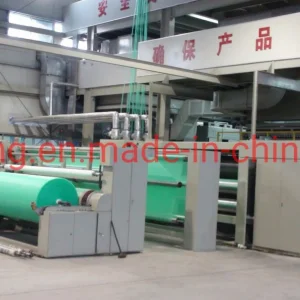
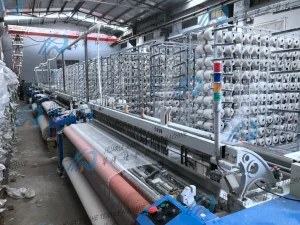
China's medical device manufacturing sector has transitioned from manual assembly to advanced automation. The Integration of Factory 4.0 systems within production hubs like Suzhou and Changzhou ensures high consistency, quality, and scale.
Our manufacturing partners utilize multi-axis CNC Swiss-type lathes and automated EDM (Electrical Discharge Machining) systems to fabricate components with tolerances within ±5 microns. Laser welding systems are used to join micro-machined jaw elements to control rods, helping prevent mechanical failures during surgical procedures.
Strict Quality Assurance Standards: All raw materials—primarily AISI 304, AISI 316L, and 420 martensitic stainless steels—undergo spectral testing upon arrival at the facility. This step verifies metal composition to prevent corrosion and ensure lasting tensile strength.
Production is carried out in certified cleanrooms (Class 100,000/ISO Class 8) to control particulate and microbiological contamination prior to sterilization packaging. Operating under ISO 13485 quality management systems, our partner factories record inspections at every production stage, providing complete traceability from raw metal bars to finished medical instruments.
Optical measurement systems scan completed instrument tips, automatically comparing critical dimensions against master CAD files to prevent out-of-tolerance units from reaching packaging lines.
Distributing medical devices globally requires navigating complex regulatory landscapes. For European and international markets, compliance with the European Medical Device Regulation (MDR 2017/745) and possessing valid CE certification is essential. Working with Hanora Medical ensures all suppliers are fully audited and comply with these strict requirements.
We verify that our manufacturing partners possess active ISO 13485 quality management system certifications. This standard governs all phases of design, production, cleanroom assembly, and post-market tracking.
All contact materials undergo evaluation according to ISO 10993. This includes cytotoxicity, sensitization, irritation, and systemic toxicity testing to guarantee patient safety during surgical operations.
We coordinate the compilation of comprehensive technical files, including clinical evaluation reports (CER), sterilization validation records (steam/EtO), and design history files (DHF) required for regulatory submission.
Procurement teams at international medical distributors, private hospital chains, and ministries of health face the challenge of balancing high clinical performance with supply chain stability and compliance. Managing these priorities requires a structured, multi-step verification process.
Supplier Auditing and On-Site Verification: Reviewing certifications online is often not enough. Our quality assurance team conducts detailed, on-site audits of manufacturing facilities. We inspect cleanroom air pressure differentials, review calibration schedules for metal processing machinery, and check trace records for raw steel supplies. This thorough verification helps protect our clients from regulatory issues or unexpected production delays.
Customization, OEM, and Branding Needs: Many distributors require custom laser markings, customized instrument lengths, or specific jaw patterns for unique surgical procedures. Hanora Medical assists clients with custom design and branding needs, coordinating private labeling (OEM) and package design while ensuring compliance with Unique Device Identification (UDI) regulations.




 Hanora Medical