Select industrial configurations optimized for direct export and turnkey setup in South American manufacturing parks.
Understanding regional market dynamics, trade policies, and growth avenues in the MERCOSUR market.
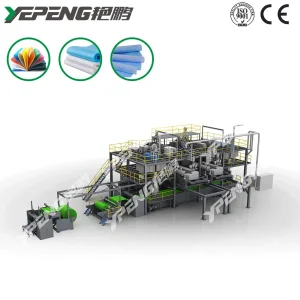
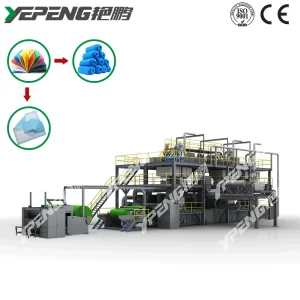
Paraguay is rapidly transitioning into a regional industrial powerhouse within the Southern Common Market (MERCOSUR). Historically dependent on imports for high-grade synthetic textiles, Paraguayan industrialists in cities like Ciudad del Este, Villeta, and Asunción are increasingly investing in domestic production capabilities. Non-woven fabrics, specifically Spunbond (S, SS, SSS) and composite Meltblown (SMS, SMMS, SSMS) configurations, form the backbone of modern hygienic, agricultural, and medical supply chains.
This industrial pivot is fueled by Paraguay's highly favorable manufacturing landscape. With access to cost-effective hydroelectric power from the Itaipu and Yacyretá dams, combined with competitive tax systems such as the Maquila Regime, local operations can achieve lower structural overheads compared to neighboring countries. By importing advanced extrusion machinery from China and processing virgin polypropylene (PP) granules locally, Paraguayan factories can supply high-demand medical materials, agricultural protective sheets, and hygiene substrates to both domestic end-users and lucrative export markets like Brazil and Argentina.
Under the MERCOSUR trade agreement, manufactured goods produced in Paraguay that satisfy local content rules can enter Brazil and Argentina tariff-free. This creates an unparalleled economic runway for companies employing advanced Chinese extrusion lines to assemble raw materials into high-value medical textiles, agricultural covers, and hygiene products.
The global demand for non-woven fabrics continues to swell. Post-pandemic supply chain risk mitigation has forced medical and hygiene distributors to establish decentralized manufacturing clusters. SMS and SMMS technology offers a layered structure where spunbond layers provide high tensile strength and durability, while inner meltblown layers deliver highly efficient particulate filtration barriers. Achieving this requires precision machinery capable of running continuously with minimal downtime, precise temperature control across the extrusion die heads, and dynamic web-forming systems.
Why procurement headers trust Chinese engineering for non-woven extrusion lines.
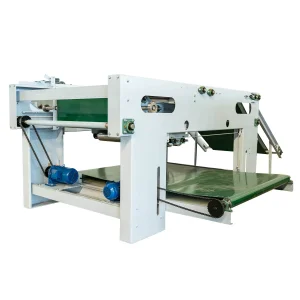
China has solidified its position as the premier source for non-woven production equipment. Chinese machinery manufacturers design lines that offer state-of-the-art technological features—such as computerized PLC human-machine interfaces, automatic cross-lapper profiling systems, and high-frequency ultrasonic welding modules—at a fraction of the cost of European equivalents. This allows Paraguayan operators to dramatically reduce their initial capital expenditure (CAPEX), yielding a much faster return on investment (ROI).
Furthermore, parts standardization ensures that replacement heaters, spinnerets, slot dies, and electrical components can be easily sourced and swapped, avoiding costly operational interruptions. Extruder screw geometries (L/D ratios) are optimized for modern virgin PP materials to minimize energy draw, reducing utility expenses even further when paired with Paraguay’s clean hydro-energy grid.
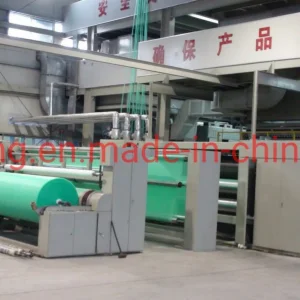
Unlike rigid equipment suppliers, Chinese manufacturers excel in modular and custom line configurations. Whether configuring a high-productivity 2400mm SS/SMS line for rapid hygiene production, or configuring an agricultural co-extrusion blown film system, engineering layouts can be tailored to the exact dimensions of your factory floor. Every line is integrated with advanced safety systems, tension control rewinding systems, and online defect detection devices to guarantee consistent quality output matching international standards (ISO 13485, CE).
Founded in 2013, Suzhou Hanora Medical Supplies Co., Ltd. has evolved into a premier sourcing and quality assurance partner for medical devices, laboratory apparatus, and high-capacity production machinery. Operating as your virtual office in China, we manage the entire procurement lifecycle to eliminate risk, control quality, and guarantee transparent transactions.
We maintain a strict code of transparency: the prices we secure are 100% authentic factory-gate prices, and we encourage clients to pay manufacturing facilities directly. Beyond our devotion to engineering excellence, we pledge 5% of our operational profits to charity to foster a better global community.

New clients receive free sourcing services for up to 3 distinct products. Expect comprehensive price quotes within 1-2 business days.

We provide multiple payment channels, enabling clients to wire funds directly to the manufacturers to secure the transaction.

Our engineers perform rigorous pre-shipment inspections, verify material certifications, and run physical machinery dry trials.

We send representatives to negotiate technical terms, customized tooling modifications, and delivery schedules directly at the plant.

Easily navigate OEM, ODM, custom machine adjustments, and consolidated multi-supplier shipments within a unified workflow.

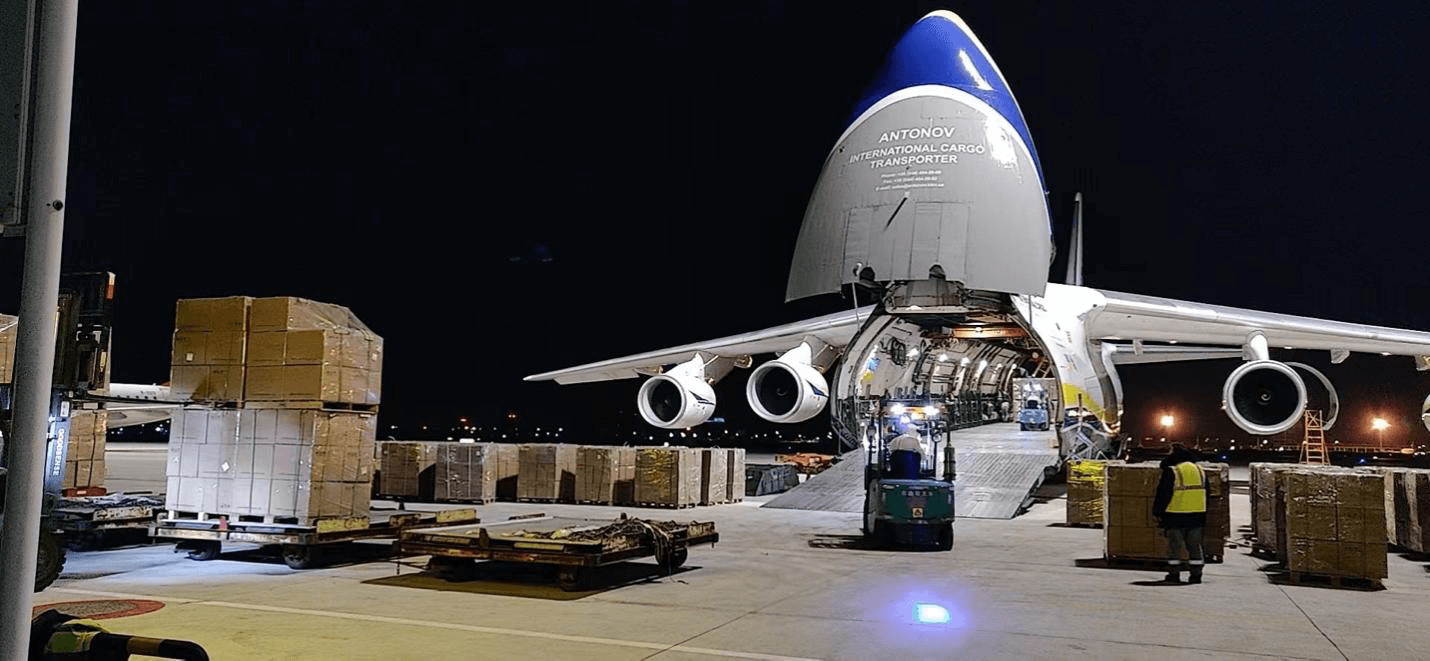
Exporting to over 30 countries. We secure optimized sea-freight rates and handle import documentation to facilitate custom clearance.

How local industries deploy different grades of non-woven fabrics and downstream machinery.
Hospitals and clinics throughout Paraguay require continuous access to surgical gowns, isolation drapes, face masks, and sterilization wraps. High-efficiency SMMS lines produce materials with a high barrier performance that repels blood, alcohol, and fine pathogens, complying with standard sanitary guidelines.
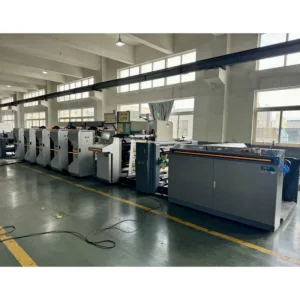
Converters in the Maquila zone utilize flexo printing machines and high-speed cutting lines to manufacture consumer items. This includes branded shopping bags, beauty sheets, disposable table runners, and clinical bed covers tailored for local retail and regional export markets.
Paraguay's agricultural sector benefits from UV-stabilized spunbond covers to shield cash crops from frost, pests, and direct sunlight. Additionally, polyester needle-punched geotextiles are critical in road building and infrastructure development along the Paraguay-Paraná waterway.
The non-woven industry is actively moving toward sustainability and smart automation. Operators are shifting toward biodegradable PLA (Polylactic Acid) granules alongside standard PP. Meanwhile, manufacturers are adopting closed-loop control systems where the machinery dynamically adjusts melt pump pressures and calender rollers to maintain exact fabric thickness (GSM) across runs. Choosing energy-efficient motors and heaters is also vital to keep operational costs low and meet international green manufacturing requirements.
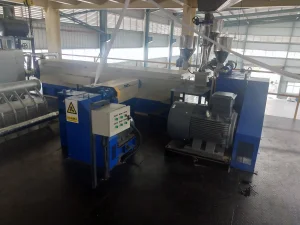
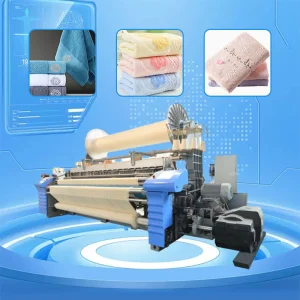
From raw PP pellet feeding to printed, slitted, and finished non-woven consumer goods.
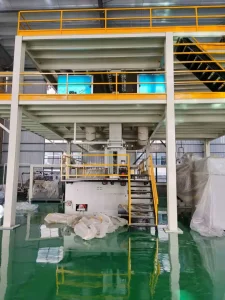
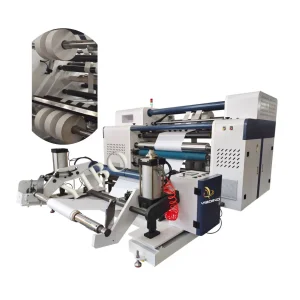
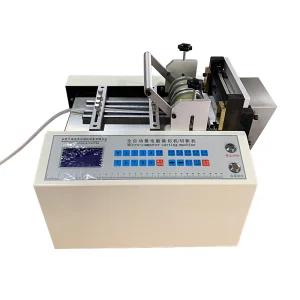
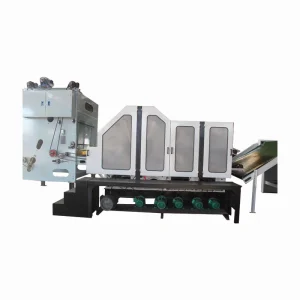
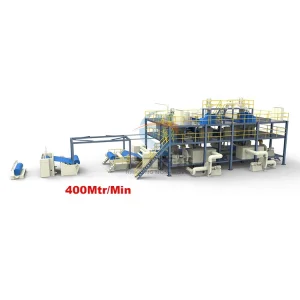
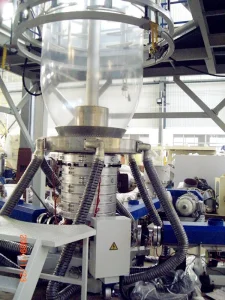
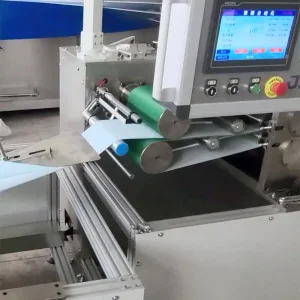
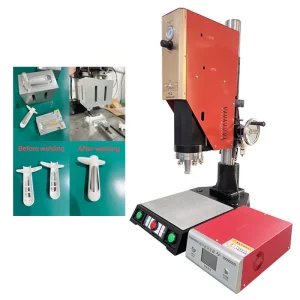
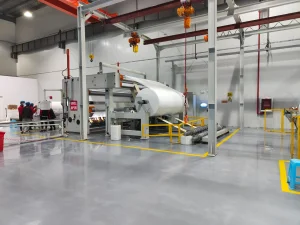
Protecting your capital and ensuring long-term technical support when importing heavy manufacturing lines.
Investing in a non-woven production system is a multi-year project that requires careful attention to engineering and compliance details. To help technical procurement managers make informed decisions, we recommend evaluating the following key metrics:
| Equipment Subsystem | Key Technical Metric | Significance & Quality Target |
|---|---|---|
| Extruder Screw Assembly | L/D Ratio of 30:1 or 32:1 | Ensures complete heating and uniform extrusion of PP polymers, preventing raw output variations. |
| Meltblown Die Head | Hole Density > 35 holes/inch | Directly affects web uniformity and BFE (Bacterial Filtration Efficiency) ratings. High-end lines use hanger-style die heads. |
| Heating System | Precision temperature controllers (+/- 1°C) | Essential to avoid polymer burning. Multi-zone heating elements yield a consistent fabric feel. |
| Calendering System | Pneumatic/Hydraulic Nip Pressure Control | Maintains consistent thermal bonding and smooth fabric texturing across full working widths. |
Hanora Medical works as your virtual engineering team in China. We review these metrics during factory audits, verify custom modifications, and run sample trials to ensure the final product meets your specifications before packing and shipping.
Common questions regarding importation, setup, and support for non-woven machinery in Paraguay.
Building a complete SMS or SMMS line typically takes 90 to 120 days. This timeline includes custom frame engineering, precision machining of the spinneret and die heads, electrical wiring, and a series of dry and wet factory tests prior to disassembly and shipping.
The disassembled machinery is packed in reinforced containers to prevent salt-air corrosion. Once the components arrive at your facility in Paraguay (typically via the port of Villeta or Asunción), our partner engineers provide on-site installation, wiring, testing, and training for local operators. We also support remote commissioning via video link.
Yes, our modern Spunbond and Meltblown systems are designed to handle both virgin Polypropylene (PP) and eco-friendly Polylactic Acid (PLA) polymers. Processing recycled resins may require upgrading the filter screen changer and adjusting the extruder screw parameters, which can be configured during the design phase.
A standard 2400mm SS line requires a stable three-phase industrial power supply (typically 380V/50Hz, customized to Paraguayan electrical standards), a cooling water circulation system, and a clean compressed air source. Detailed utility layouts are provided during the pre-installation phase to help prepare your site.
We provide a transparent sourcing process: you receive the original factory invoice and can pay the machinery plant directly. Our team manages product inspections, monitors manufacturing milestones, and performs on-site quality checks. We charge a flat service fee or commission based on the project scope.
 Hanora Medical