High-performance, automated manufacturing systems tailored to meet the strict regulatory standards of the East African healthcare sector.
An in-depth analysis of the growing demand for localized medical protective equipment manufacturing in East Africa.
In recent years, the United Republic of Tanzania has embarked on a transformative journey to upgrade its healthcare infrastructure. Guided by the Tanzania Development Vision 2025 and the Ministry of Health's strategic plans, there has been an unprecedented expansion of public and private healthcare facilities. From regional referral hospitals to localized dispensaries, the demand for high-quality medical consumables—specifically medical-grade latex and nitrile examination gloves—has scaled exponentially.
Historically, Tanzania and the broader East African Community (EAC) have relied on imports for over 90% of their medical devices and protective equipment. This high dependency exposes the local healthcare system to supply chain disruptions, fluctuating freight costs, and currency depreciation. Establishing localized medical latex glove manufacturing plants is no longer just a commercial opportunity; it is a strategic national priority.
By shifting from importing finished gloves to importing advanced manufacturing machinery, Tanzanian enterprises can leverage significant competitive advantages. The Government of Tanzania, through the Tanzania Investment Centre (TIC) and the Export Processing Zones Authority (EPZA), offers robust fiscal incentives. These include tax holidays, duty-free importation of capital goods (such as heavy-duty glove dipping machinery), and streamlined licensing processes for industrial projects.
Furthermore, local production drastically reduces the lead time for procurement by the Medical Stores Department (MSD), the national agency responsible for procuring, storing, and distributing medicines and medical supplies to public health facilities. A domestic factory equipped with state-of-the-art automated machinery can respond dynamically to local epidemics, routine hospital demands, and export opportunities within the Southern African Development Community (SADC) and the EAC.
Mitigating risks, ensuring quality compliance, and navigating complex supply chains from factory to port.
Procuring heavy industrial machinery like a medical latex glove production line involves navigating complex technical specifications, high capital expenditure, and strict quality assurance protocols. For Tanzanian buyers, the primary challenge lies in bridging the gap between local operational realities (such as power stability and operator skill levels) and the engineering designs of global manufacturers.
This is where a dedicated, professional sourcing partner becomes indispensable. Sourcing directly from China—the global hub for advanced medical machinery manufacturing—requires rigorous oversight. Without on-site verification, buyers risk facing mismatching technical specifications, delayed shipping schedules, or substandard components that fail to meet international medical standards like ISO 13485 or CE certification.
To address these procurement bottlenecks, Suzhou Hanora Medical Supplies Co., Ltd. offers a comprehensive, end-to-end sourcing framework. We act as your virtual office in China, ensuring that every piece of machinery destined for Tanzania undergoes rigorous quality control, pre-shipment inspections, and factory audits.
Our engineering and sourcing teams work directly with the factories to customize the machinery to withstand local environmental conditions in Tanzania, such as high ambient humidity in coastal regions like Dar es Salaam, and to integrate energy-efficient systems that mitigate the impact of local power fluctuations.
Founded in 2013, Suzhou Hanora Medical Supplies Co., Ltd. is a premier sourcing company focusing on medical devices, laboratory equipment, and heavy-duty medical manufacturing machinery. We are committed to providing our global clients with comprehensive, one-stop sourcing services, serving as their highly reliable virtual office in China.
Our extensive sourcing services include: product sourcing, strategic price negotiation, supplier verification, factory auditing, real-time production monitoring, lab testing, order follow-up, strict quality control, pre-shipment inspection, and comprehensive logistics support. Having exported our products to more than 30 countries, we possess deep expertise in navigating international trade regulations and shipping logistics.
Our Promise to Clients: The prices we offer are 100% authentic factory-gate prices. To maintain absolute transparency and security, our clients are always allowed and encouraged to pay directly to the manufacturing factories. Beyond business, we are deeply committed to social responsibility, donating 5% of our net profits to charity to help build a better, healthier world.

Engineered to deliver seamless, secure, and highly efficient procurement experiences for Tanzanian industrial buyers.

For new clients, we provide free sourcing services for up to 3 different products. Detailed price quotes are delivered within 1-2 working days after acquiring your specific demands.

We offer highly flexible and secure payment structures, including direct payments to the manufacturing factories, ensuring complete transparency and peace of mind.

Our expert engineering team conducts all-rounded factory investigations, verifying product qualifications, customs export history, on-site audits, and pre-shipment inspections.

We dispatch experienced representatives directly to the factories to negotiate the best commercial terms, long-term partnerships, and customized technical specifications on your behalf.

Leveraging our robust supplier database, we handle complex OEM, ODM, custom sampling, and mixed-model shipments, tailored to your exact project requirements.

With exports to over 30 countries, we partner with top-tier global freight forwarders to guarantee highly competitive shipping rates and stable logistics to Dar es Salaam Port.

Understanding the core engineering phases of a modern medical latex glove production line.
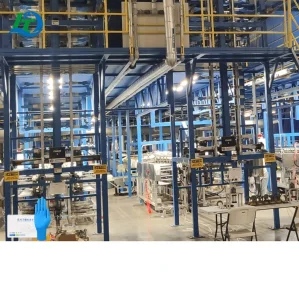
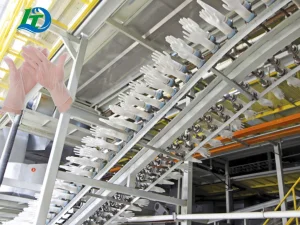
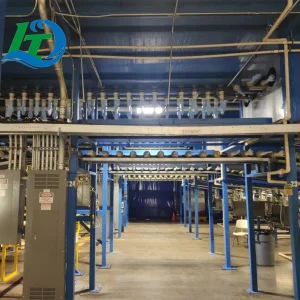
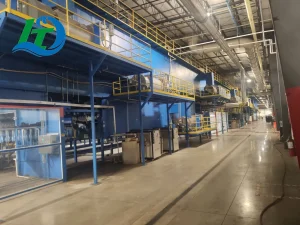
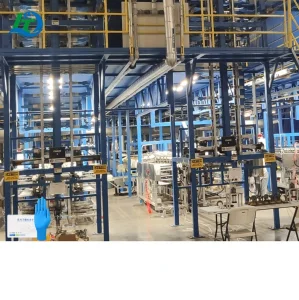
A modern medical latex glove production line is a highly sophisticated, continuous-chain system that requires precise synchronization of chemical, thermal, and mechanical processes. For investors in Tanzania, understanding the technical roadmap is crucial for ensuring operational efficiency and product quality.
The process begins in the compounding area, where raw natural rubber latex (NRL) or synthetic nitrile butadiene rubber (NBR) is mixed with vulcanizing agents, accelerators, antioxidants, and stabilizers. This mixture must be matured under controlled temperatures to achieve the optimal viscosity and chemical structure, ensuring the final gloves possess excellent tensile strength and elasticity.
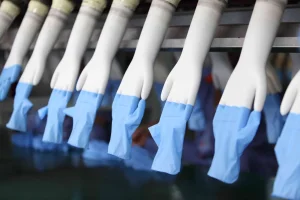
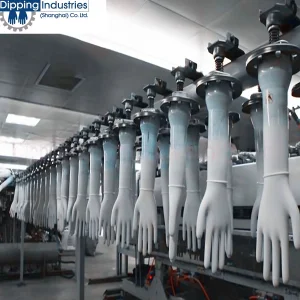
The hand-shaped ceramic formers are thoroughly cleaned using acid, alkali, and water washes to remove any residue. Once dried, they are dipped into a coagulant solution (typically calcium nitrate). The coagulant acts as a chemical magnet, ensuring that when the formers are dipped into the compounded latex, a uniform layer of latex adheres to the mold.
The coated formers pass through a series of high-temperature vulcanization ovens. This process cross-links the rubber molecules, giving the gloves their final physical properties. Following vulcanization, the gloves undergo wet leaching—a critical purification step that extracts water-soluble proteins and chemical residues, minimizing the risk of allergic reactions for healthcare workers. Chlorination or polymer coating is then applied to facilitate easy donning.
Energy Efficiency in Tanzania: Because industrial energy costs can be high in East Africa, our modern machinery integrates heat recovery systems that recycle exhaust heat from the vulcanization ovens back into the drying phases, reducing overall LPG or biomass fuel consumption by up to 25%.
Ensuring seamless integration with Tanzanian industrial standards and regulatory bodies.
Setting up a medical manufacturing facility in Tanzania requires strict adherence to local laws and international standards. The primary regulatory body overseeing medical devices is the Tanzania Medicines and Medical Devices Authority (TMDA). Any glove manufactured locally must undergo rigorous testing to ensure it meets the barrier protection, tensile strength, and freedom-from-holes standards defined by TMDA and the Tanzania Bureau of Standards (TBS).
To guarantee a smooth transition from installation to full-scale commercial production, Hanora Medical coordinates comprehensive on-site support. Our partner engineers travel directly to your factory site in Tanzania to manage the mechanical assembly, electrical wiring, and calibration of the dipping lines.
We believe that technology is only as good as the people operating it. Therefore, our commissioning package includes intensive training programs for local Tanzanian operators and maintenance technicians. This covers chemical compounding management, burner calibration, chain tension adjustments, and preventive maintenance protocols to minimize unplanned downtime.
Industrial sustainability is a core focus of modern manufacturing. Medical glove factories generate wastewater containing latex solids, coagulants, and trace chemicals. We assist Tanzanian investors in designing and integrating localized wastewater treatment plants (WWTP) that comply fully with the guidelines set by the National Environment Management Council (NEMC) of Tanzania, ensuring safe discharge or recycling of process water.
Get in touch with our senior technical sourcing directors today. We provide comprehensive feasibility studies, customized machinery configurations, and transparent factory-direct pricing.
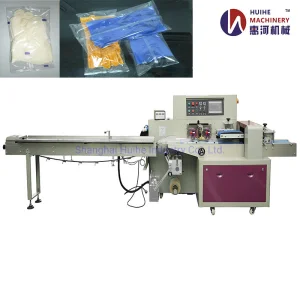
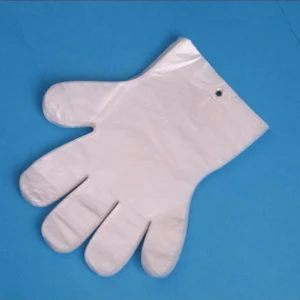
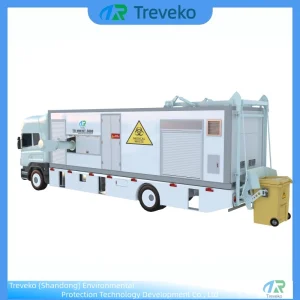
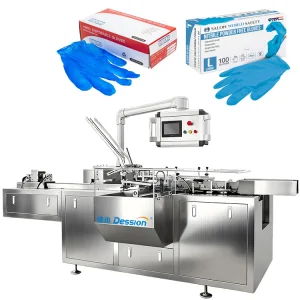
Send Inquiry NowExplore our comprehensive portfolio of glove making, packaging, and specialized medical waste processing machinery.
Expert answers to the most common queries regarding medical glove factory setup, compliance, and logistics in Tanzania.
A standard double-track medical glove production line requires a factory building length of approximately 120 to 160 meters, a width of 12 to 15 meters, and a minimum height clearance of 6 to 8 meters. This allows for optimal installation of the continuous chain conveyor system, dipping tanks, and multi-tier vulcanization ovens.
TMDA compliance requires the manufacturing process to adhere to ISO 13485 (Medical Devices Quality Management Systems). The finished gloves must pass specific physical tests, including ASTM D3578 (for latex) or ASTM D6319 (for nitrile), which measure tensile strength, elongation, and barrier integrity (pinhole testing via water leak tests).
A standard production line requires a stable 3-phase electrical supply (typically 380V/50Hz), a continuous water supply for the washing and leaching tanks, and a reliable thermal energy source (such as Liquefied Petroleum Gas, natural gas, or biomass boilers) to heat the vulcanization and drying ovens.
We offer 100% transparent pricing with direct factory payment options. We conduct rigorous on-site factory audits, monitor the entire production cycle in China, perform strict pre-shipment quality inspections, and handle all complex shipping and customs documentation to ensure safe delivery to Dar es Salaam Port.
 Hanora Medical