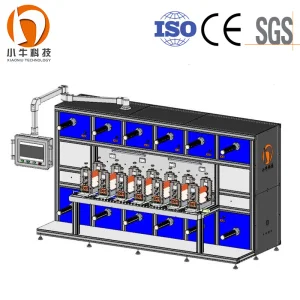
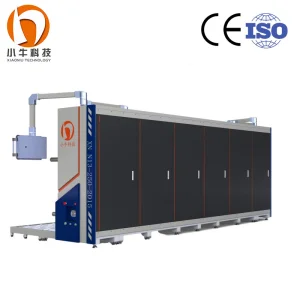
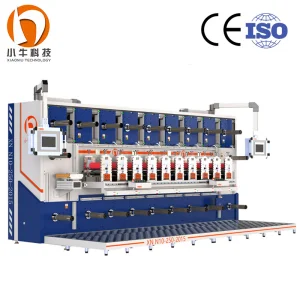
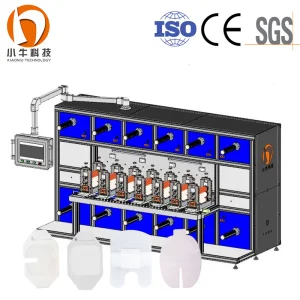
High-speed machinery customized for Equatorial Guinea's demanding medical specifications.
Equatorial Guinea, comprising both mainland Río Muni and Bioko Island (home to the capital Malabo), is executing comprehensive modernization plans to upgrade its domestic medical capabilities. Under the framework of national health initiatives, public and private consortia are shifting from purely importing finished medical disposables to establishing regional manufacturing hubs. The regional goal is to minimize long-term capital outflow while ensuring local hospitals have immediate access to high-grade surgical materials.
The manufacturing landscape in Equatorial Guinea is characterized by strict compliance requirements aligned with the Economic and Monetary Community of Central Africa (CEMAC) regulatory structures. To build local production reliability, regional operators require high-automation dressing lines that minimize human handling, maximize sterility, and yield uniform dimensional tolerance. The import of raw medical-grade materials such as polyurethane (PU) films, non-woven backings, and hypoallergenic adhesives from global suppliers highlights the urgent need for machinery that handles these delicate components with precise tension feedback and low waste rates.
Industrial setups in Malabo and Bata require medical dressing machinery that can tolerate local voltage variances, run in high-humidity cleanrooms, and be operated by local workforces trained via accessible human-machine interfaces (HMI). Manufacturers serving this region must deliver not only hardware but also end-to-end technical engineering support, validation documents, and remote diagnostics capability.
In the contemporary clinical environment, hospital-acquired infections (HAIs) and needle displacement events represent massive operational costs. Catheter securement devices and sterile IV dressings are no longer basic bandages; they are integrated biological interfaces designed to maintain vascular access site integrity. Consequently, the machinery manufacturing these items must operate with strict mechanical accuracy.
Engineered to support precise layering and cleanroom specifications for global exports.
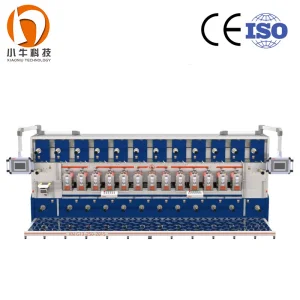
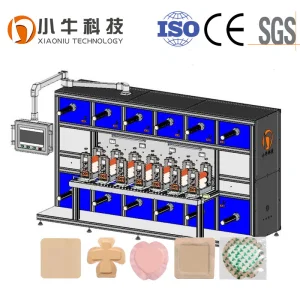
Suzhou Hanora Medical Supplies Co., Ltd., established in 2013, stands as a premier medical equipment sourcing and engineering platform. We operate as a dedicated extension of your procurement division, serving as your virtual office in China to eliminate regional logistics and technical hurdles. Our capabilities span product sourcing, technical negotiation, rigorous factory auditing, production monitoring, raw material testing, and pre-shipment inspections.
We bridge the gap between global buyers and Chinese Medical Industry 4.0 factories. For our international clients, we guarantee 100% authentic, transparent factory-gate prices, and encourage direct-to-factory payments to optimize financial safety and reduce overhead. Aligning with our commitment to human welfare, we dedicate 5% of our net profits to global charity efforts to support healthcare accessibility.
Connect with our Engineering Team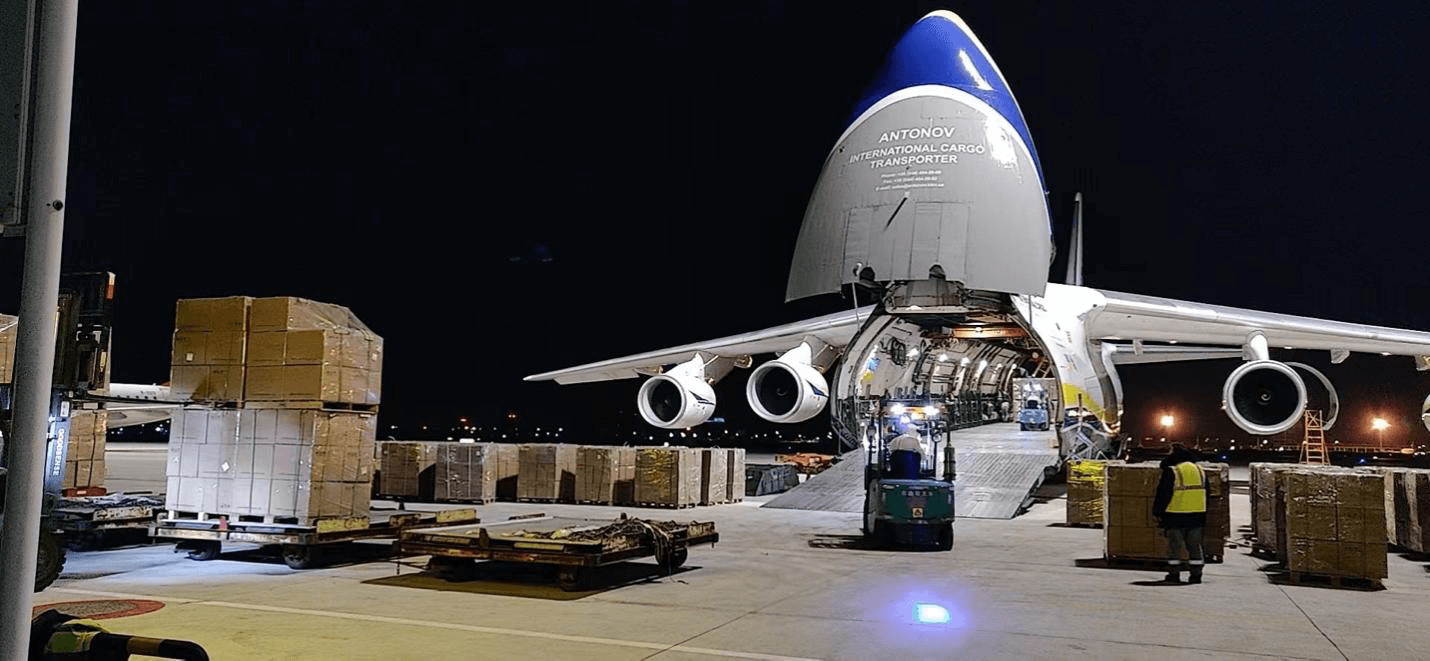

For new clients entering the Central African market, we deliver technical product evaluations for up to 3 distinct machinery classes, providing detailed proposals within 1-2 business days.

We configure multiple payment avenues, including letters of credit or direct transfers to the audited manufacturers, safeguarding capital integrity throughout the transaction.

Our mechanical and QA engineers verify factory certifications (ISO 13485, CE, FDA), review historical customs data, perform direct on-site stress tests, and inspect equipment pre-shipment.

We deploy senior engineering representatives to negotiate factory guarantees, spare parts contracts, and specialized machine adjustments for foreign clinical markets.

We handle mixed model logistics, tooling customization for specific medical dressing shapes, and comprehensive OEM/ODM setups for proprietary branding.

Exporting to 30+ countries, we manage logistics with global ocean carriers to route machinery efficiently to Malabo Port or Bata Port with full shipping security.

The global medical manufacturing landscape relies on Chinese machine tool development for its integration of manufacturing speed and supply chain reliability. Selecting a Chinese dressing manufacturing line provides several strategic operational advantages:
Suzhou and the surrounding Yangtze River Delta contain the world's most dense cluster of medical equipment component manufacturers. From high-grade electrical control cabinets and precision rotary dies to advanced tension sensors and medical-grade materials, all parts are sourced within a tight geographical area. This ecosystem minimizes lead times and accelerates technological upgrades.
Unlike rigid European machinery lines where tooling modifications incur high costs and long lead times, Chinese factories design lines around flexible modular platforms. Engineers can quickly program custom cut patterns for local clinics in Malabo, allowing factories to switch between IV dressings, surgical island dressings, and silicone foam pads on a single manufacturing system.
Exported medical machinery complies with ISO 13485 (Medical Devices - Quality Management Systems) and CE machinery directives. The integration of high-grade PLC controllers (e.g., Mitsubishi, Siemens) alongside robust pneumatic elements ensures that production lines maintain high uptime and operational safety, even in challenging industrial environments.
A complete portfolio of manufacturing lines for silicone dressings, wound pads, and bandage slitting.
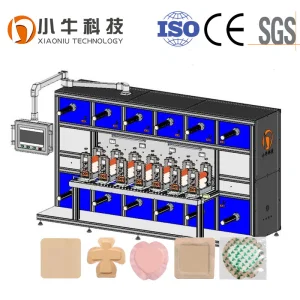
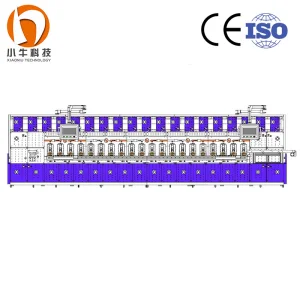
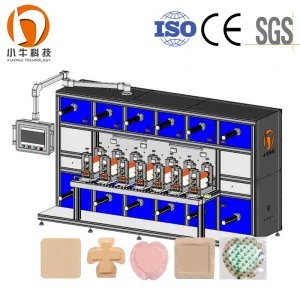
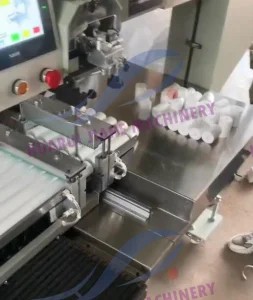
Expert technical insights regarding medical dressing machine deployment in Equatorial Guinea and Central Africa.
Contact Suzhou Hanora's engineering team today to receive detailed machine configurations, custom design options, and transparent factory-direct pricing for the Equatorial Guinea market.
Send Inquiry Now Hanora Medical