Medical product packaging is entering a more demanding era. Patients expect clarity, while healthcare providers need speed, safety, and dependable handling. The 2026 Best Medical Product Packaging Trends will examine how design, materials, technology, and human factors are reshaping this critical sector.
Walter Soroka, a respected packaging technology author, described packaging as “the means of ensuring safe delivery of a product to the ultimate consumer in sound condition.” That principle remains highly relevant to Medical Product Packaging Innovations And Trends. A sterile syringe may require a peelable pouch with clear opening instructions. A temperature-sensitive biologic may need connected sensors and visible exposure indicators. A child-resistant bottle must still remain manageable for older adults.
Small details matter.
This overview will explore recyclable barrier materials, smart labels, tamper evidence, accessible instructions, and automation-ready formats. It will also consider how packaging protects product integrity during transport, storage, and daily use. Evidence from validated testing, human-factors research, and quality systems will guide the discussion. Marketing claims alone are not enough.
Some innovations sound impressive but remain difficult to scale. Recyclable materials can lose performance when barrier requirements increase. Digital features may confuse users without reliable connectivity. These limitations deserve honest attention. Better packaging is not simply newer packaging. It must be safe, understandable, manufacturable, and practical.
The strongest 2026 solutions will connect engineering discipline with patient experience. They will reduce handling errors, support responsible material choices, and communicate essential information at a glance. Progress may be uneven. That is precisely why careful evaluation matters.
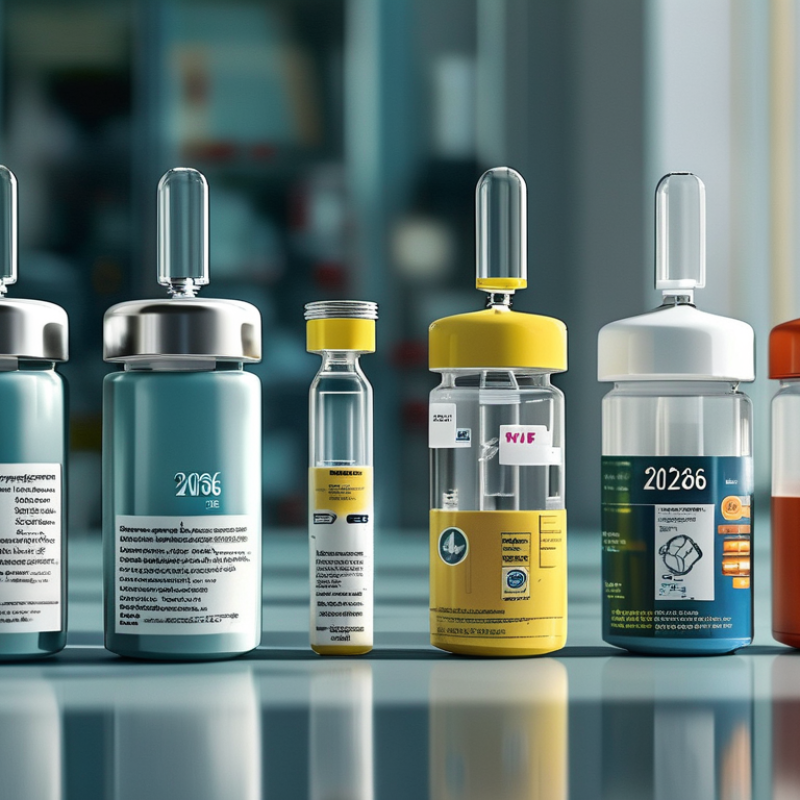
In 2026, medical packaging trends will be defined less by appearance than by measurable risk reduction. The World Health Organization estimates medication errors cost about US$42 billion annually worldwide. That figure makes legibility, dose protection, and tamper evidence operational priorities. The FDA’s 2023 human factors guidance supports clearer packaging interactions. A raised label or stronger contrast may matter more than a premium finish.
Sustainability will be judged against sterility, shelf life, and disposal realities. The WHO reports that healthcare produces roughly 4.4% of global carbon emissions. Packaging engineers therefore face a narrow path: reduce material, preserve barrier performance, and document every trade-off. The OECD’s Global Plastics Outlook found that only 9% of plastic waste was recycled. Mono-material designs look attractive. Sterilization requirements can still limit simple solutions. This remains unresolved.
Digital identity will shape cartons, pouches, and labels. GS1 Healthcare guidance emphasizes standardized identifiers for supply-chain traceability. By 2026, a scannable code may connect packaging with instructions, recall data, and authenticity checks. Yet not every patient owns a reliable smartphone. That weakness is easy to overlook. Printed instructions and human support must remain available. Smart packaging can create another barrier. A paper leaflet may still prevent more errors than a clever app.
The global pharmaceutical packaging market is projected to expand steadily toward 2026, driven by higher demand for sterile protection, regulatory traceability, patient-friendly formats, and more sustainable material choices.
The 2023 market value and 3.9% compound annual growth rate are based on published pharmaceutical packaging market research. Values for 2024–2026 are calculated projections using the reported CAGR. The figures represent the overall pharmaceutical packaging market, not any individual company or brand.
By 2026, medical packaging will be judged by safety, compliance, and usability together. A secure package is not enough.
The WHO Global Patient Safety Action Plan reports that one in ten patients experiences harm during healthcare. It also states that more than half of this harm is preventable. These figures make tamper evidence, clear labeling, and sterile-barrier protection practical priorities. Packaging teams should show opening instructions, dosage details, and expiry information at a glance. Small print still creates avoidable risk.
Usability testing should include older adults, gloved workers, and people with limited hand strength. FDA human-factors guidance supports evaluating real users in realistic conditions. A package that opens easily in a laboratory may fail beside a hospital bed. Designers increasingly use tactile markers, color contrast, and serialized information for traceability. Digital access can help, but it cannot replace essential printed instructions.
Compliance also shapes material choices, seal validation, and transport testing under ISO 11607. Yet overengineering can create excessive layers and confusing steps. That is an uncomfortable design flaw. Teams should measure opening time, error rates, and damaged seals before approving production. Sustainability matters, but reduced material must never weaken protection or inspection visibility. Fresh assumptions need evidence.
2026 Best Medical Product Packaging Trends: How Smart Technologies Improve Medical Packaging Performance
Medical packaging is becoming a data carrier, not merely a protective shell. The need is practical. The World Health Organization estimates that one in ten medical products in low- and middle-income countries is substandard or falsified (WHO, 2017). Serialized codes, tamper-evident seals, and connected labels can record each handoff. A pharmacist can scan the pack and verify its history within seconds.
Temperature sensors also make storage risks visible. A small indicator can change color after excessive heat exposure. Near-field communication labels can display batch details, expiry dates, and handling instructions. These features support faster investigations and reduce manual recording. The IQVIA Institute projects global medicine spending will reach nearly 1.9 trillion dollars by 2028 (Global Use of Medicines 2024). More products will move through complex supply chains.
However, smart packaging is not automatically safer. Sensors need calibration, secure data systems, and readable instructions. A failed battery can create false confidence. A glossy label may be difficult to scan under cold-room lighting. Packaging teams should test connectivity, humidity resistance, accessibility, and disposal procedures together. This is where experience matters. Technology can improve performance, but poor validation still creates weak points. Small failures matter.
| Packaging Trend | Smart Technology | Primary Performance Improvement | Relevant Data Dimension | Typical Measurable Outcome | Best-Fit Medical Products | Implementation Consideration |
|---|---|---|---|---|---|---|
| Serialized 2D barcode packaging | GS1 DataMatrix or other machine-readable 2D code | Improves identification, traceability, recall accuracy, and inventory control | GTIN, batch or lot number, expiration date, and serial number | More product information in less print area; supports item-level verification | Medicines, implants, diagnostic kits, and sterile devices | Requires high-contrast printing, code verification, data governance, and scanner compatibility |
| NFC and RFID-enabled packs | Near-field communication or radio-frequency identification tags | Enables contactless authentication, stock visibility, and patient or clinician access to instructions | Read events, location, unique identity, tamper status, and expiry data | Reduces manual scanning steps and improves visibility across storage and distribution points | High-value medicines, connected devices, samples, and clinical-trial materials | Tag placement, metal or liquid interference, privacy controls, and reader infrastructure must be assessed |
| Temperature-monitoring packaging | Time-temperature indicators, electronic data loggers, and connected sensors | Provides evidence of cold-chain conditions and supports disposition decisions | Temperature range, excursion duration, cumulative exposure, and location | Makes temperature excursions visible instead of relying only on arrival-time inspection | Vaccines, biologics, blood products, insulin, and temperature-sensitive diagnostics | Sensor accuracy, calibration, battery life, alarm thresholds, and regulatory records are critical |
| Tamper-evident smart seals | Breakable seals, conductive traces, printed sensors, or digitally recorded opening events | Strengthens package integrity and helps detect unauthorized access | Seal status, opening timestamp, event location, and chain-of-custody record | Creates visible or electronic evidence of package opening or attempted manipulation | Controlled medicines, sterile products, implants, and laboratory specimens | The seal must not compromise sterility, usability, recyclability, or lawful access to the product |
| Connected adherence packaging | Electronic dose sensors, light or sound reminders, mobile applications, and QR or NFC access | Supports correct dosing schedules and provides optional adherence feedback | Dose access time, missed-dose events, refill timing, and user interaction | Improves visibility of dose-taking behavior without changing the medicine itself | Oral solid medicines, home-use therapies, and multi-dose regimens | Design should be intuitive, accessible, low-power, privacy-conscious, and usable without a smartphone where necessary |
| Digital instructions and accessibility | QR codes, NFC links, multilingual content, audio guidance, and accessible digital leaflets | Improves access to current instructions while reducing dependence on small printed text | Scan rate, language selection, content version, accessibility use, and update date | Allows controlled updates to usage information without reprinting every package component | Home-care devices, diagnostic tests, medicines, and complex combination products | Digital content should supplement, not automatically replace, legally required labeling and instructions |
| Vision-inspected packaging | Machine vision, optical character recognition, and automated code grading | Detects print defects, missing components, incorrect labels, and damaged seals before release | Defect rate, code quality, label position, seal presence, and inspection coverage | Moves inspection toward objective, repeatable, and documented quality control | Blister packs, sterile barriers, vials, syringes, and diagnostic kits | Lighting, camera validation, false-reject control, and audit-ready data retention are required |
| Lower-material and recyclable packaging | Digital material records, design-for-recycling analysis, lightweighting tools, and smart sorting identifiers | Reduces material use while maintaining barrier, sterility, and distribution performance | Material weight, recycled content, recyclability route, package-to-product ratio, and waste volume | Enables measurable environmental improvements without relying only on visual redesign | Secondary cartons, transport packaging, device trays, and non-sterile components | Patient safety, barrier protection, sterilization compatibility, and local recycling infrastructure remain decisive |
| Digital chain-of-custody records | Cloud databases, secure APIs, serialized event records, and role-based dashboards | Improves accountability from packaging through distribution, dispensing, and returns | Custody event, timestamp, location, handler, shipment condition, and exception status | Creates a searchable history for investigations, recalls, and inventory reconciliation | High-value products, clinical-trial supplies, controlled medicines, and implantable devices | Interoperability, cybersecurity, access control, data integrity, and retention policies must be defined |
Medical packaging in 2026 must balance sterile protection with lower environmental impact. Sterility comes first. The World Health Organization’s 2024 health-care waste fact sheet reports that about 15% of medical waste is hazardous, including infectious materials and chemical contaminants. Packaging design should therefore reduce unnecessary layers without weakening the sterile barrier.
High-density polyethylene and polypropylene can support lightweight, recyclable formats when their grades, additives, and recycling routes are clearly controlled. Medical-grade paper remains useful for breathable sterile pouches, but its polymer coating can complicate recycling. Aluminum foil offers excellent moisture and oxygen protection, although its production footprint requires careful life-cycle assessment. Recycled content is promising. Yet, it may introduce variability and extractables that demand stronger supplier controls.
Eurostat reported 186.5 kilograms of packaging waste per person in the European Union during 2022, including 36.1 kilograms of plastic packaging. This pressure encourages mono-material structures, reduced package volume, and fiber-based outer cartons. However, molded fiber cannot automatically replace a validated sterile barrier. ISO 11607 testing still requires evaluation of seal strength, microbial protection, aging, and transport damage. Evidence matters. A package that looks sustainable may fail after heat exposure or vibration. That uncomfortable possibility deserves more attention. Designers should document material origin, sterilization compatibility, and end-of-life conditions before approving a new format.
2026 Best Medical Product Packaging Trends?
Healthcare brands are choosing packaging solutions with patient safety, usability, and supply reliability in mind. The “best” format is rarely the most attractive one. It must protect the product during shipping, storage, and daily handling. Sterile barrier systems, tamper evidence, and clear dose information remain essential. Digital labels may support traceability, but technology cannot replace readable instructions. Packaging teams should test designs with nurses, pharmacists, patients, and warehouse staff before approval.
Tips: Define the product risks first. Check grip strength, opening force, label contrast, and disposal steps. Test samples in cold, humid, and rough transport conditions. Record every failure, even small ones.
Sustainable materials are gaining attention, yet medical packaging needs careful validation. Reduced material use may lower waste, but thinner layers can affect protection. Recyclable components can also create confusion when local facilities cannot process them. This is where practical experience matters. Teams should compare lifecycle impact, regulatory requirements, production capacity, and patient needs. One weakness remains common: designers sometimes test packaging in clean offices, not crowded clinics or kitchens. Real-world observation can reveal torn seals, hidden expiry dates, or caps that are difficult to replace. A controlled rollout, documented feedback, and measurable quality checks help turn a promising concept into a dependable healthcare solution.
Measurable risk reduction will matter more than decoration. Clear labels, dose protection, and tamper evidence can prevent handling errors. A raised label may outperform a glossy finish.
Reduce unnecessary layers, but protect the sterile barrier. Test seal strength, microbial protection, aging, and transport damage. A thinner package may create new risks.
Controlled grades of polyethylene and polypropylene can support lightweight formats. Medical paper helps create breathable pouches. Aluminum protects against moisture and oxygen, but its footprint needs review.
They can, when suppliers control variability and contamination risks. Recycled content may introduce unwanted substances. More testing is needed. It is promising, not automatically safe.
Not completely. Sterilization and barrier requirements may require different layers. Local recycling facilities may also reject certain formats. The simple-looking answer can fail.
Scannable codes may connect packs with instructions, recalls, and authenticity checks. Printed information must remain available. Not every patient has a reliable smartphone.
Test grip, opening force, label contrast, expiry visibility, and cap replacement. Observe nurses, patients, pharmacists, and warehouse workers. Clean offices are not enough.
Test it in cold, humid, crowded, and rough transport conditions. Record torn seals, hidden dates, and difficult openings. Small failures still matter. Some weaknesses may remain undiscovered.
It should protect the product during shipping, storage, and daily use. Teams should document materials, sterilization compatibility, disposal conditions, and user feedback. A controlled rollout reduces surprises.
Medical Product Packaging Innovations And Trends in 2026 are being shaped by the need to protect products, support patient safety, and improve the healthcare experience. Packaging designs increasingly focus on tamper evidence, clear labeling, accurate dosing guidance, accessible opening features, and reliable protection against moisture, light, contamination, and physical damage. Compliance and usability are considered together so that packaging can meet quality requirements while remaining practical for healthcare professionals and patients.
Smart technologies are also improving packaging performance through track-and-trace features, digital instructions, temperature monitoring, and indicators that help confirm product integrity. At the same time, manufacturers are exploring recyclable, lightweight, and lower-impact materials without compromising sterility or barrier protection. Successful implementation depends on evaluating product sensitivity, distribution conditions, user needs, production capabilities, and end-of-life considerations. By balancing safety, sustainability, technology, and operational efficiency, healthcare organizations can select packaging solutions that provide dependable protection and support better outcomes throughout the product lifecycle.

Hanora Medical