Top 10 Lateral Flow Assay Assembly Machines to Consider?

Time:2026-03-30 Author:Mason
0%

In the rapidly evolving field of diagnostics, the efficiency of production plays a crucial role. Lateral Flow Assay Assembly Machines are becoming increasingly vital in this context. Dr. Emily Chen, a leading expert in medical diagnostics, once stated, "The right assembly machine can significantly enhance the accuracy and speed of test production." This highlights the importance of selecting the right equipment.

Choosing the right Lateral Flow Assay Assembly Machine is not straightforward. It requires a deep understanding of both technology and specific testing needs. Various machines offer unique features, creating a complex landscape for manufacturers. Factors such as speed, accuracy, and cost-effectiveness should guide decisions. However, some machines may promise more than they deliver.

Investing in these machines is crucial for meeting growing demand. Yet, it is essential to critically assess each option available. The market offers numerous choices, which can be overwhelming. Each assembly machine’s performance should be evaluated thoroughly. The success in diagnostics often hinges on these key elements. Understanding the nuances of each option is vital for manufacturers looking to elevate their operational efficiency.
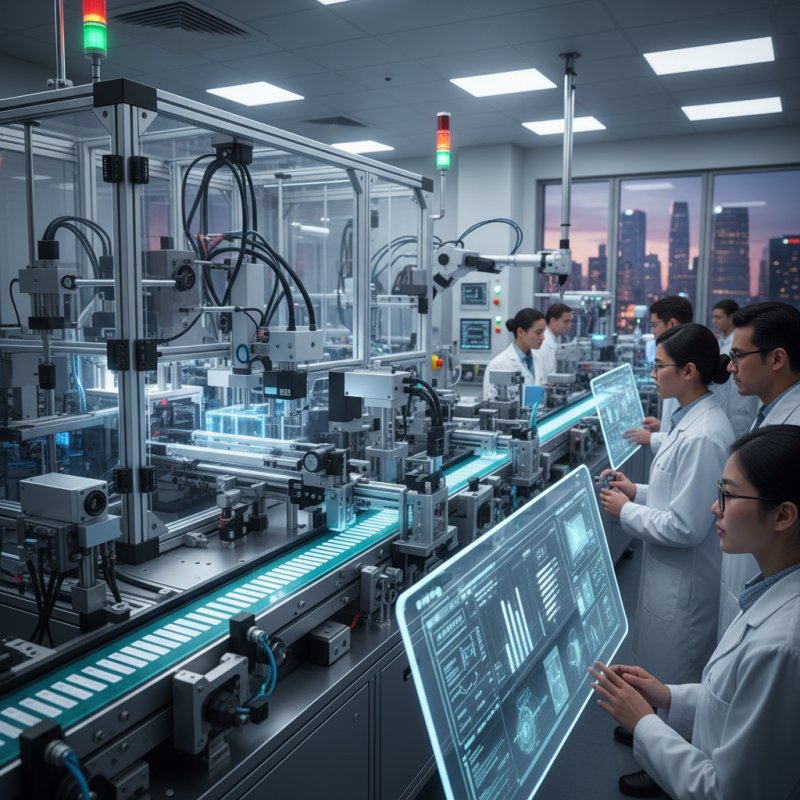
Top 10 Lateral Flow Assay Assembly Machines to Consider?

Overview of Lateral Flow Assay Assembly Machines

Lateral flow assay assembly machines play a critical role in the diagnostics sector. These machines streamline the production of test strips used for various medical tests. Their efficiency impacts the overall speed of testing, which is vital during health emergencies. Manufacturers often seek machines that balance speed and quality.

When considering these machines, it’s essential to focus on the assembly process. Some machines integrate multiple functions, while others require manual intervention. This could hinder production if not optimized. Each machine varies in its ability to handle different formats, from rapid tests to complex assays.

Investing in skilled operators is equally important. Training staff can reduce errors during assembly. Regular maintenance also ensures machines run optimally. It’s easy to overlook these factors, but they significantly affect the final product's reliability. Ultimately, understanding these dynamics helps manufacturers make informed decisions.

Key Features to Evaluate in Assembly Machines

When evaluating lateral flow assay assembly machines, several key features demand attention. Accuracy in the assembly process stands paramount. According to a recent market report, a machine's precision can directly impact test reliability by up to 30%. Any fluctuations in assembly can lead to inconsistent results, making reliability crucial for end-users.

Speed is another critical factor. In the fast-paced diagnostics field, assembly machines must operate swiftly. Research indicates that the demand for quicker turnaround times is rising, with a 50% increase in the need for rapid assays. Machines that can handle high throughput without sacrificing quality are more valuable. This balance remains a challenge within the industry, as some high-speed machines compromise on precision.

User-friendliness also plays a vital role. Operators should be able to navigate the system easily. Complicated interfaces can slow down production and lead to errors. A user-centric design can minimize training time and enhance operational efficiency. However, many machines still struggle with this aspect, creating potential setbacks in productivity. Each of these features deserves careful evaluation when choosing an assembly machine for lateral flow tests.

Top 10 Lateral Flow Assay Assembly Machines to Consider

Machine Model Production Speed (tests/hour) Number of Stations Automation Level Footprint (mm) Key Feature
Model A 120 4 Fully Automated 1500 x 800 Real-time quality control
Model B 100 6 Semi-Automated 1400 x 700 Modular design
Model C 150 5 Fully Automated 1600 x 900 Integrated camera inspection
Model D 110 3 Manual 1200 x 600 Compact design
Model E 130 4 Semi-Automated 1450 x 750 Versatile calibration options
Model F 90 2 Manual 1100 x 500 Low-cost solution
Model G 140 5 Fully Automated 1500 x 850 High throughput
Model H 160 6 Semi-Automated 1700 x 900 Advanced robotics
Model I 80 3 Manual 900 x 400 User-friendly interface
Model J 150 5 Fully Automated 1550 x 800 Multiple format compatibility

Top Manufacturers of Lateral Flow Assay Machines

When considering lateral flow assay machines, it's essential to focus on manufacturers known for their expertise. Many companies excel in developing these machines, integrating technology and engineering skills. A reliable manufacturer often has a history of delivering quality products. Some also provide customized solutions to meet specific needs.

These manufacturers offer a range of machines for various applications. Some specialize in high-speed assembly, while others focus on precision and accuracy. Attention to detail is crucial in production. Even minor variations can impact results. Therefore, selecting a manufacturer with a strong commitment to quality is vital.

Another consideration is the support and service offered. Manufacturers that provide training and technical assistance can enhance the user experience. A company’s reputation can often reflect its reliability. Checking for customer reviews and industry certifications can offer insights into their professionalism. Balancing quality and cost is challenging, yet necessary for successful investment.

Comparative Analysis of Machine Efficiency and Output

When evaluating lateral flow assay assembly machines, focus on their efficiency and output. Each machine's design contributes to its performance. A well-engineered machine streamlines the assembly process, reducing error rates and increasing output. Key factors include speed, accuracy, and ease of operation. Machines with advanced technology often achieve higher throughput, but complexity can introduce errors.

Consider the calibration needs of various machines. Some require frequent adjustments, while others maintain precision over extended periods. Finding a balance between speed and consistency is crucial. A faster machine may seem ideal, but if it sacrifices quality, the end product suffers. User feedback plays a significant role in assessing machine reliability. Operators highlight challenges often overlooked in specifications.

Don’t forget maintenance aspects. Machines that are difficult to clean or service can impact both performance and longevity. Cost-effectiveness is not just about the initial purchase; ongoing operational costs matter too. Multiple users have noted discrepancies in manufacturers’ promised output versus real-world performance. Such insights should inform your decision-making process.

Top 10 Lateral Flow Assay Assembly Machines - Efficiency Comparison

This chart presents the efficiency comparison of the top 10 lateral flow assay assembly machines, showcasing their performance in percentage terms. Each machine’s efficiency is critical in determining the best choice for manufacturing needs.

Market Trends and Future Innovations in Assay Assembly Machines

The landscape of assay assembly machines is evolving rapidly. Recent innovations focus on improving efficiency and accuracy. Automation plays a crucial role in this transformation. Advanced technologies help to reduce human error in the assembly process. These machines now incorporate features for real-time data analysis. This ensures quality control and enhances production speed.

Market trends indicate a growing emphasis on user-friendly designs. Companies are seeking machines that require minimal training. This shift is essential for maintaining productivity in fast-paced environments. Sustainability is also a key consideration. Many manufacturers are exploring eco-friendly materials and processes. This aligns with global goals for reducing waste.

Future innovations may include enhanced connectivity. Smart machines that communicate with other devices can streamline operations. However, with these advancements come challenges. Ensuring data security and addressing maintenance needs can be complex. As the market continues to grow, staying informed will be vital for manufacturers.

FAQS

: What is the role of lateral flow assay assembly machines?

: These machines streamline the production of test strips for medical tests. Their efficiency affects testing speed during emergencies.

Why is the assembly process important?

The assembly process can vary. Some machines integrate functions, while others need manual help, which can slow production.

How does operator skill impact machine performance?

Skilled operators reduce assembly errors. Training staff is crucial for ensuring accuracy during the assembly process.

What is the effect of machine accuracy on test reliability?

A machine’s precision can affect test reliability by up to 30%. Fluctuations in assembly lead to inconsistent results.

Why is speed a critical factor in these machines?

The diagnostics field demands rapid turnaround times. Quicker assembly without quality loss is essential but challenging.

How does user-friendliness affect operational efficiency?

Complicated interfaces slow production. A user-centric design reduces training time and improves overall efficiency.

What challenges exist in balancing speed and quality?

Many high-speed machines sacrifice precision. This trade-off complicates the production of reliable test results.

How important is regular maintenance of these machines?

Maintenance is vital for optimal machine performance. It's easy to neglect, but it significantly impacts product reliability.

Are all assembly machines capable of handling different test formats?

No, machines vary in handling capabilities. Some are designed for simple tests, while others can manage complex assays.

What should manufacturers consider when investing in these machines?

They must evaluate accuracy, speed, user-friendliness, and maintenance requirements. Each factor influences the machine's effectiveness.

Conclusion

Lateral Flow Assay Assembly Machines play a crucial role in the rapid diagnostics market by automating the assembly process of tests used for various health assessments. This article provides a comprehensive overview of these machines, highlighting key features to evaluate, such as speed, accuracy, and ease of use.

Furthermore, the analysis includes a comparative look at machine efficiency and output, enabling manufacturers to make informed decisions about the equipment that best suits their production needs. As market trends evolve, innovations in Lateral Flow Assay Assembly Machines are expected to enhance performance and meet the increasing demand for rapid testing solutions, ensuring a significant impact on the healthcare landscape.

Mason

Mason

Mason is a seasoned marketing professional with a deep expertise in the company's offerings and a passion for driving brand awareness. With a strong background in digital marketing strategies, he has an innate ability to connect with diverse audiences and effectively communicate product benefits.......