In today's rapidly evolving healthcare landscape, understanding the latest Medical Equipment Trends For Modern Factories is crucial. Dr. Sarah Thompson, a leader in medical technology innovation, emphasizes, "Adapting to new medical trends can significantly improve factory efficiency and patient outcomes." These trends are reshaping how manufacturers design and operate their facilities, blending technology with healthcare needs.
The integration of advanced robotics, automated systems, and data-driven solutions is at the forefront. Factories are moving towards smart manufacturing, where connectivity plays a vital role. However, not every trend is cutting-edge or perfect. Some manufacturers struggle to adapt to these significant shifts. This gap highlights a need for ongoing training and investment in technology.
While the benefits of these trends are clear, the implementation can be challenging. Organizations must assess their readiness to embrace change. Logistics, workforce training, and equipment upgrades can complicate integration. Finding the right balance between innovation and reliability is essential in a sector that serves critical health needs.
The medical equipment manufacturing sector is undergoing a significant transformation. Automation is at the forefront of this evolution, driving efficiencies and enhancing production capabilities. According to a report by MarketsandMarkets, the global medical device automation market is projected to reach $24 billion by 2026. This shift reflects a growing demand for speed and precision in the manufacturing process.
Automation streamlines production lines, reducing the margin for human error. Robotic systems are increasingly employed for tasks such as assembly and packaging. A survey by the International Federation of Robotics revealed that 71% of manufacturers cite increased productivity as a primary benefit of automation. While this innovation presents enormous advantages, it presents challenges too. Workforce adaptation and upskilling are essential as traditional roles evolve. Workers may feel threatened by the shift and some may resist training for new technologies.
Despite the clear benefits, there are risks associated with reliance on automated systems. Cybersecurity threats could potentially jeopardize the integrity of machines and data. Furthermore, equipment breakdowns can lead to costly downtimes. Balancing the adoption of these systems with risk management strategies remains a top concern in the industry. The path forward necessitates ongoing dialogue between technology and workforce to ensure a harmonious transformation.
| Trend | Description | Impact on Manufacturing | Future Outlook |
|---|---|---|---|
| Automation | Increasing use of automated systems in production processes. | Improved efficiency and reduced labor costs. | Continued integration of AI and robotics. |
| 3D Printing | Use of 3D printing technology for customized medical devices. | Significantly reduced production times and costs. | Increased adoption for bespoke solutions. |
| IoT Integration | Connecting devices to the internet for real-time monitoring. | Enhanced data collection and predictive maintenance. | Expansion of smart devices across the industry. |
| Sustainability | Focus on eco-friendly materials and processes. | Reduced environmental impact and compliance with regulations. | Growth in green technologies and practices. |
| Telemedicine | Increased reliance on remote medical consultations. | Demand for equipment enabling virtual care. | Continued growth post-pandemic. |
| Wearable Technology | Devices that monitor health metrics in real-time. | Increased patient engagement and preventative care. | Rising acceptance in healthcare settings. |
| Data Analytics | Utilization of big data to enhance decision-making. | Improved operational efficiency and patient outcomes. | Growing importance for strategic planning. |
| Augmented Reality (AR) | Training and assistance using AR technologies. | Enhanced training experiences for medical staff. | Increased use in surgical education. |
| Regulatory Compliance | Tightening regulations influencing manufacturing processes. | Increased costs and focus on quality assurance. | Continued evolution of compliance standards. |
| Cybersecurity | Protecting sensitive health data from breaches. | Increased investment in secure technologies. | Growing concerns and solutions in data protection. |
: Automation increases efficiency, enhances production, and reduces human error in manufacturing processes.
Workforce adaptation and upskilling are essential. Some workers may resist training for new technologies.
IoT devices improve patient monitoring and diagnostics through real-time data collection, enhancing patient outcomes.
Increased connectivity raises concerns about data security and the risk of cyber attacks on sensitive information.
It allows workers to receive immediate medical advice, improving safety and overall productivity.
Data privacy, security, and worker comfort with technology can lead to potential resistance and challenges.
Successful integration requires teaching workers how to use these tools effectively to enhance employee wellness.
Companies must weigh the potential improvements against the responsibility to protect patient information and ensure security.
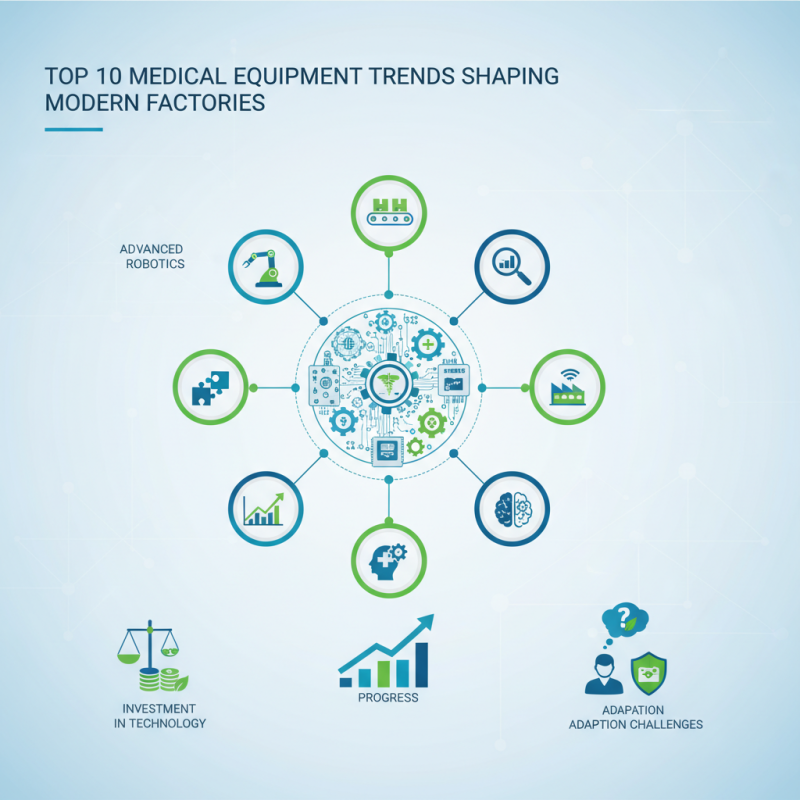
The article "Top 10 Medical Equipment Trends Shaping Modern Factories" explores the transformative trends impacting the manufacturing landscape of medical equipment. Key among these is the rise of automation, which enhances efficiency and precision within factories. Additionally, the integration of IoT technologies into modern medical devices is revolutionizing data collection and device functionality, paving the way for smarter healthcare solutions.
Sustainable practices are increasingly critical in production processes, reflecting a growing commitment to environmental responsibility. The advancements in telemedicine are reshaping manufacturing priorities, as devices are designed to meet new healthcare delivery needs. Finally, emerging trends in medical equipment design prioritize user experience, ensuring that products are both effective and user-friendly. Together, these Medical Equipment Trends For Modern Factories create a blueprint for future innovations in the healthcare sector.

 Hanora Medical