Global medical sourcing can reduce costs, expand capacity, and improve access to essential products. It can also expose companies to quality failures, transport delays, currency pressure, and sudden supplier closures. A single late shipment may leave a hospital waiting for sterile gloves, diagnostic kits, or temperature-sensitive medicines.
Former WHO Director-General Dr. Margaret Chan warned, “The world is not prepared for a severe pandemic.” Her statement remains relevant to procurement leaders. Preparedness cannot depend on one factory, one shipping route, or one reassuring audit report. Medical Industry Risk Management Strategies must connect supplier qualification with daily operational decisions.
Effective planning begins with a clear supplier map. It should show manufacturing sites, critical subcontractors, raw-material sources, and logistics routes. Teams can then rank suppliers by clinical importance, lead time, regulatory history, and recovery capability. They should also verify quality certifications, change-control procedures, traceability records, and cold-chain controls.
The details matter.
A backup supplier is not automatically a reliable supplier. It may lack validated processes or sufficient capacity during a crisis. Regular audits, sample testing, and documented communication can expose these weaknesses earlier. Digital monitoring can help, but it does not replace professional judgment.
No framework catches every weak signal. A compliant supplier can still miss a vessel departure or experience a local power failure. That uncomfortable gap deserves attention. Strong risk management therefore combines evidence, scenario planning, ethical sourcing, and continuous review. It protects patients without ignoring cost, practicality, or the limits of prediction.
Defining Medical Industry Risks in Global Sourcing
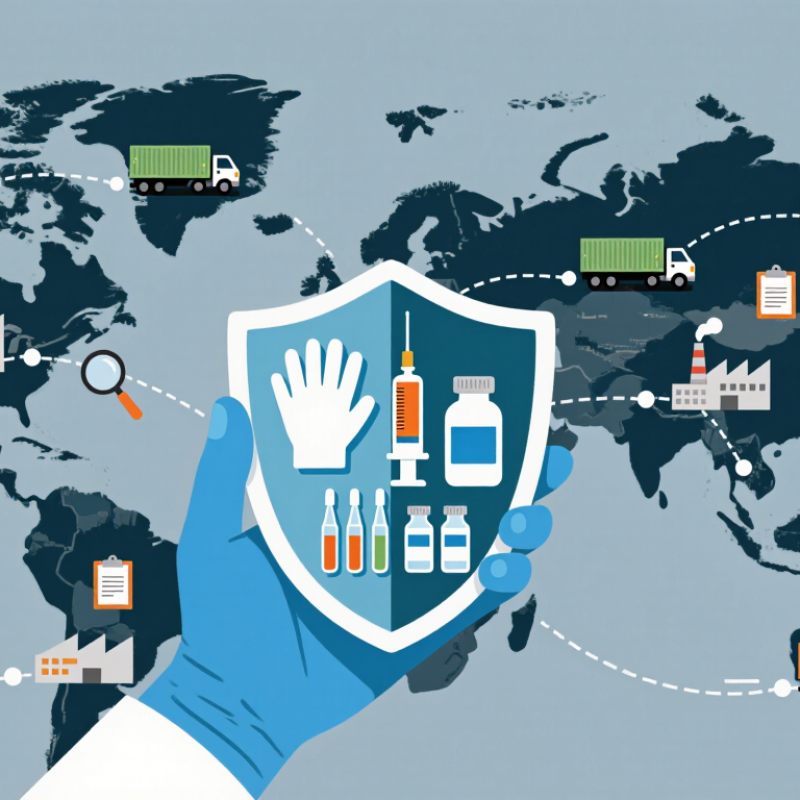
Defining medical industry risks in global sourcing starts with recognizing that risk is more than a late shipment. It includes inconsistent product quality, weak traceability, supplier interruptions, and gaps in documentation. A batch may arrive on time yet lack clear records of its materials, testing, or handling. That is a risk.
The World Health Organization estimated in 2017 that roughly one in ten medical products in low- and middle-income countries was substandard or falsified. This figure describes those markets, not every global supply chain, but it shows why supplier verification matters.
Risks can also travel through several tiers. A direct supplier may meet specifications while relying on an unseen subcontractor for a critical component. Temperature-sensitive products can face exposure during customs delays or transfers between warehouses. The WHO’s 2022 report on global vaccine market conditions documented how concentrated production and limited manufacturing capacity can affect supply availability. Buyers should therefore map critical components, check audit and testing records, and agree on how deviations are reported. Paperwork alone is not proof. In practice, even a well-run audit can miss a change made after the visit; that uncomfortable possibility deserves attention. Risk definitions should reflect the product, its intended use, and the actual route it takes—not just the supplier’s country or a checklist score.
Evaluating Suppliers, Markets, and Regulatory Requirements
Global medical sourcing should begin with supplier evidence, not price. Request ISO 13485 certification, recent audit reports, batch records, complaint logs, and corrective-action history. Verify whether certificates match the exact facility and product scope. WHO estimates that one in ten medical products in low- and middle-income countries is substandard or falsified. That figure makes independent testing and traceability essential. Ask for serialisation records, sterilisation results, and temperature data where cold-chain transport applies. A polished presentation proves little.
Market evaluation needs equal discipline. Review demand forecasts, import controls, local tender rules, currency exposure, and logistics reliability. The World Bank’s Logistics Performance Index shows wide differences in customs efficiency and shipment timeliness across economies. These gaps can affect product integrity before customs clearance. Map the route from factory to hospital, including backup warehouses and temperature alarms. A cheaper market may carry higher compliance costs.
Regulatory requirements should be checked before any purchase order. Confirm product classification, registration duties, authorised representatives, labelling language, clinical evidence, and post-market reporting obligations. Rules differ between medicines, devices, diagnostics, and software. Maintain a country-specific compliance matrix, then update it when regulations change.
In practice, teams often overtrust supplier questionnaires. They should not. A remote audit may miss weak segregation, incomplete training records, or undocumented subcontracting. On-site verification, sample testing, and contract clauses for recalls provide stronger protection. Perfect due diligence is unrealistic, but undocumented assumptions are avoidable.
Sources: World Health Organization, A study on the public health and socioeconomic impact of substandard and falsified medical products, 2017; World Bank, Logistics Performance Index, 2023.
Building Quality Control and Product Safety Measures
Global medical sourcing becomes risky when quality controls stop at the purchase order. Product safety begins with clear specifications, not attractive quotations. Define materials, tolerances, packaging, shelf life, and intended use before selecting suppliers. Request traceable records, calibrated equipment logs, and recent test results. A capable supplier should explain failures, not hide them. In practice, an impressive audit can still miss a weak subcontractor. That gap matters.
Use risk-based supplier qualification. Review manufacturing steps, worker training, contamination controls, and change management. Verify critical claims through independent laboratory testing when risks justify it. Inspect pilot samples before approving mass production. Check dimensions, function, labeling, seal integrity, and microbial results where relevant. Keep retained samples from every lot. Temperature loggers can reveal damage during long transport. Small details matter. A certificate alone does not prove safe performance. Compare it with test methods, batch numbers, and actual samples.
Build traceability from raw material to final shipment. Assign lot numbers, record inspection decisions, and define who can stop product release. Use clear nonconformance procedures, including quarantine, root-cause review, corrective action, and effectiveness checks. Monitor complaint trends after delivery, even when volumes remain low. One overlooked complaint may signal a wider defect. Global teams also need controlled translations and consistent training. I would not pretend every control works perfectly. Auditors can overlook quiet processes, and data can be incomplete. Review the system after every deviation, then improve the weakest step.
How to Manage Medical Industry Risks When Sourcing Globally?
Building Quality Control and Product Safety Measures
Global medical sourcing requires documented supplier qualification, risk-based inspections, lot traceability, process validation, complaint monitoring, and corrective and preventive actions. These benchmark figures show why design controls, manufacturing quality, and preventive safety measures should be prioritized throughout the supply chain.
Sources: World Health Organization, “Patient Safety” fact sheet; U.S. Food and Drug Administration, medical device recall analysis. The indicators use different reference populations and should not be interpreted as directly comparable.
Managing Logistics, Data, Currency, and Supply Disruptions
How to Manage Medical Industry Risks When Sourcing Globally?
Global medical sourcing fails in small, visible ways: a delayed container, a missing certificate, or a temperature alarm. The World Bank’s Logistics Performance Index 2023 shows major gaps between countries in customs, infrastructure, and shipment tracking. Build buffers around critical devices, active ingredients, and sterile packaging. Use at least two qualified supply routes, not merely two suppliers. A second supplier cannot help if both depend on the same port.
Data risks also travel with products. Supplier portals may expose batch records, forecasts, or patient-related information. The 2024 Cost of a Data Breach report found that healthcare breaches remained among the most expensive incidents, averaging millions of dollars per event. Segment access, encrypt files, and verify bank-account changes through an independent channel. Currency movements can quietly erase procurement savings. Set review thresholds for exchange rates and price adjustments. Fixed-price contracts sound safe, but they may hide higher risk premiums.
Tips: Map every tier you can, including packaging and transport subcontractors. Track temperature, customs status, and currency exposure weekly. UNCTAD’s Review of Maritime Transport 2023 highlights how disruptions can increase route pressure and shipping uncertainty. Keep safety stock for genuinely critical items, but do not overstock products with short shelf lives. Practice a disruption drill with real documents and real decision owners. It may expose uncomfortable gaps. That is useful.
Creating a Continuous Risk Monitoring and Response System
Global medical sourcing needs more than a supplier approval checklist. Risks can change after production begins. A delayed shipment, damaged seal, or missing temperature record may affect product safety. Build a live monitoring system around each supplier, material, and shipment. Track audit findings, delivery changes, complaint trends, and corrective actions in one controlled record. Assign an owner to every risk. Set clear thresholds for escalation, such as repeated late deliveries or unexplained quality deviations. Evidence should be dated, traceable, and easy to review.
Tips: Review key indicators weekly, not only during audits. Use simple risk scores for visibility. Verify unusual data before escalating it. Keep backup suppliers qualified, when practical. Test response plans with a short simulation. Record what failed, too.
A strong response system connects alerts to specific actions. Quality teams may quarantine affected stock, request investigation records, or increase inspection levels. Procurement teams can adjust orders without bypassing quality controls. Senior managers should receive concise reports showing exposure, impact, and response status. Staff need training before an incident occurs. Communication gaps remain common, especially across languages and time zones. Our own review process once focused heavily on supplier documents and missed warehouse handling conditions. That mistake reinforced a difficult lesson: monitoring must follow the product’s journey, not just the contract. Reassess controls after every serious deviation, process change, or new sourcing location.
Conclusion
Effective global sourcing in healthcare requires a clear understanding of the risks that can affect product quality, patient safety, supply continuity, and business performance. Medical Industry Risk Management Strategies begin with carefully evaluating suppliers, sourcing markets, and applicable regulatory requirements before making purchasing decisions. Organizations should also establish robust quality controls, verify product safety, and maintain clear documentation throughout the supply process.
Risk planning should extend beyond suppliers to include transportation delays, data security, currency fluctuations, and unexpected supply disruptions. By identifying potential weaknesses early and preparing practical response plans, organizations can reduce exposure and respond more effectively when conditions change. Continuous monitoring, regular supplier reviews, and well-defined escalation procedures help keep risk controls relevant over time and support safer, more reliable global sourcing.

 Hanora Medical