Choosing medical equipment for a modern factory starts with a practical question: who will use it, and where? A first-aid room beside a production line has different needs from an occupational health clinic. Noise, dust, cleaning routines, power access, and staff training all matter. A device can look impressive on a supplier’s page and still be awkward beside a busy workstation. Small details count.
Medical Equipment Trends For Modern Factories include connected monitoring, compact diagnostic tools, and equipment designed for easier cleaning and maintenance. Trends are not purchasing instructions, though. Check intended use, service requirements, staff competence, and compatibility with existing systems. Ask suppliers for clear specifications and support details. Then compare the equipment against real workplace scenarios, not just a feature list. Atul Gawande, a surgeon and author, wrote in The Checklist Manifesto: “The volume and complexity of what we know has exceeded our individual ability to deliver its benefits correctly, safely, or reliably.” His observation is not specifically about factory procurement, but it supports a useful habit: assess choices systematically.
A careful selection process should include the people who will maintain and use the equipment. Test the setup if possible. Can staff reach it quickly? Are instructions readable under ordinary room lighting? What happens when calibration or servicing is due? These questions are unglamorous. They prevent avoidable surprises. No checklist can replace judgment, and some needs will only become clear after installation. That is worth admitting. A suitable choice balances clinical purpose, reliability, usability, and lifecycle cost, while leaving room to review what works in practice.
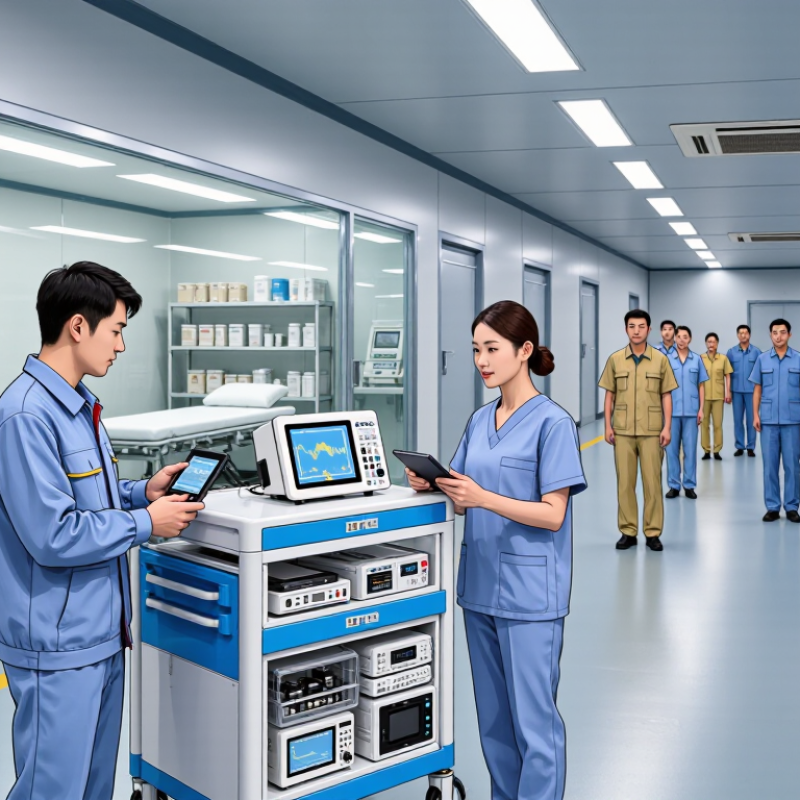
Medical equipment planning in a modern factory should start with the work, not a standard supply list. A metalworking area may need eye-wash stations close to splash hazards, while a large warehouse may need stretchers and clear routes for moving an injured worker. Map the tasks, machinery, chemicals, shift patterns, and distances to trained responders. Small details matter.
Consider how quickly staff can reach equipment during a real incident. A first-aid kit behind a locked office door may be present but practically unavailable on a night shift. An automated external defibrillator should be visible, accessible, and included in staff training. Match quantities to headcount and site layout, then ask occupational health professionals to review the choices. No kit fits every factory.
Check equipment regularly for damage, expired supplies, missing components, and battery condition. Keep inspection records, and assign a named person to follow up on problems. Test the route. A plan can look complete on paper yet fail when a noisy production line blocks access. Revisit it after new machinery, process changes, or near misses; even a careful assessment can overlook how workers actually move through the space.
A sound equipment plan begins with the work, not a catalogue. Walk the production floor during a normal shift and observe where hazards actually occur. A cutting station may need a nearby first-aid kit for lacerations, while a chemical handling area may require an accessible eyewash unit. Forklift routes, noise, heat, dust, and shift patterns also affect what workers can reach and use.
Distance matters. Measure the route from each high-risk area to emergency equipment, including doors and busy aisles. Check how many people work on each shift and whether trained responders are present. A device that depends on careful setup may be unsuitable in a loud, fast-moving workshop. Confirm that staff can use it, and that its instructions remain readable under local lighting and conditions.
Equipment should also match the factory’s response plan and upkeep capacity. Verify storage needs, inspection intervals, replacement supplies, and service requirements before purchasing. Involve occupational health staff, safety leads, and equipment users; their observations often reveal practical gaps. A tidy risk assessment can still miss a blocked cabinet or an awkward glove change. Revisit the plan after layout changes, near misses, or new processes. No checklist catches everything.
Noise exposure benchmarks for equipment selection
These 8-hour benchmarks can help determine whether a factory needs sound-level monitoring and hearing-protection equipment. OSHA sets an 85 dBA hearing-conservation action level and a 90 dBA permissible exposure limit; NIOSH recommends limiting exposure to 85 dBA. Assess actual work areas and exposure duration before selecting equipment.
When choosing medical equipment for a factory clinic, compare the job each device must perform with its actual features. A digital thermometer may be quick to clean and easy to store, while a diagnostic monitor may need a stable surface and regular checks. Useful features should solve a real workflow problem, not just look impressive on a specification sheet. Ask staff to test controls while wearing gloves. Small details matter.
Compatibility is equally practical. Check available power outlets, room dimensions, cleaning requirements, and whether devices can share data with existing records systems. A monitor that needs a network connection may be poorly suited to a room with unreliable coverage. Confirm that replacement sensors and other consumables are accessible. I have seen planning focus on purchase day and overlook storage space; that is an easy mistake to make.
Compare total cost over the expected service life, not only the quoted price. Include installation, staff training, maintenance, calibration, consumables, and likely downtime. A lower-cost device can become expensive if a common part takes weeks to replace. Ask suppliers for written service intervals and realistic repair timelines. The spreadsheet may still miss something. Staff time is difficult to price, yet repeated setup or confusing controls can quietly consume it. A short trial in the intended room can reveal those gaps before purchase.
Choosing medical equipment for a modern factory means checking more than its operating range. Confirm that each unit meets the safety requirements applicable to its intended use and location. Ask for current certificates, test reports, and instructions that match the exact model being offered. Check names, dates, and model numbers against the equipment label. A polished certificate can still belong to a different configuration. That matters.
Review practical risks, too. For example, a patient monitor near a production line may face dust, vibration, or frequent cleaning. Ask whether the manufacturer’s documentation addresses those conditions. Confirm required electrical protection, cleaning methods, and service intervals before installation. If a claim seems unclear, request written clarification rather than relying on a sales conversation. The documents should be easy to trace later.
Supplier support deserves the same scrutiny as certification. Ask who handles installation, staff training, repairs, and replacement parts, and how quickly support is usually available. Request a sample maintenance schedule and a clear process for reporting faults. A low purchase price may not help if a small component takes weeks to arrive. Paperwork is not enough. Compare actual service commitments, and note any gaps honestly; factory needs can change after equipment is installed.
Before medical equipment arrives, map its route from the loading door to the work area. Measure narrow corridors, doorways, and turning spaces; a machine that fits on paper may not clear a crowded corner. Check power capacity, ventilation, network access, and floor loading with qualified facilities staff. Leave room for cleaning and repairs. Small details matter.
Installation should include documented checks against the supplier’s specifications and the site’s intended use. Assign a trained operator to confirm settings, alarms, and basic operating steps before routine use. Training works best beside the actual equipment, not only in a meeting room. Use realistic scenarios, such as a failed startup or an unclear reading, and ask staff to explain what they would do. Keep attendance and competency records. A rushed handoff can leave gaps.
Plan maintenance before the first shift. Set inspection intervals from the equipment documentation, usage levels, and service history; record each check, repair, and calibration where applicable. Keep essential supplies available, and name someone to report faults promptly. A simple log helps reveal repeated problems, but it can be incomplete when shifts are busy. Review it with the people using the equipment, and adjust the schedule when evidence supports a change.
Start with workplace tasks, machinery, chemicals, shift patterns, and distances to trained responders. A metalworking area may need nearby eye-wash stations.
Keep them visible and reachable during every shift. A kit behind a locked office door may be useless at night. Test the route.
Check for damage, expired supplies, missing parts, and battery condition. Keep records and assign someone to follow up. Small details matter.
Request current certificates, test reports, and instructions for the exact model. Match model numbers and dates with the equipment label.
Check corridors, doorways, turning space, power, ventilation, network access, and floor loading. Leave room for cleaning and repairs.
Train staff beside the actual equipment. Practice scenarios such as a failed startup or unclear reading, and record attendance and competency.
Set inspection intervals using documentation, usage, and service history. Record checks, repairs, and calibration where applicable. Busy shifts can leave gaps.
Ask who handles installation, training, repairs, and replacement parts. Request service timelines and a fault-reporting process. A low price is not the whole picture.
Choosing medical equipment for modern factories begins with understanding the needs of the workforce and the demands of daily operations. Assess workplace risks, the types of support employees may need, and the conditions in which equipment will be used. Then compare features, compatibility with existing facilities, ease of use, and total cost over the equipment’s expected life. Considering Medical Equipment Trends For Modern Factories can help decision-makers identify practical improvements while keeping the focus on reliable, workplace-appropriate solutions.
Before purchasing, verify that equipment meets relevant safety standards and has suitable certifications. Evaluate the supplier’s support, including access to guidance, replacement parts, and service. A careful plan for installation, staff training, routine inspections, and ongoing maintenance helps ensure that equipment is used correctly and remains dependable. By weighing operational needs, safety, long-term costs, and after-purchase support, factories can make informed choices that support employee well-being and efficient operations.

Hanora Medical